Publication and freshness
This article predates our verified-timestamp system; its original publication date was not reliably recorded, so no publication or freshness date is claimed.
Byline record
Editorial Desk byline. No personal contributor profile is claimed.
Sources and method
Inspect the primary-source links in the article and our research method. Changing rules must be rechecked at the official source.
Separate review record
No separately stored fact-checker or fact-check date is published for this article. Edit history: no recorded revisions since revision tracking began.
Follow the real filming locations of the 1973 cult classic The Wicker Man across Dumfries & Galloway and southwest Scotland — Kirkcudbright, Anwoth, Burrow Head, Culzean Castle and more — with a road-trip route and respectful-visiting tips.
More than fifty years after it crept into cinemas, the original 1973 The Wicker Man — Robin Hardy's British folk-horror about a devout police sergeant lured to a pagan island — has a devoted following. Part of the spell is the place. The fictional "Summerisle" looks like a single Hebridean island, but it was stitched together from a string of real towns, harbours, ruined kirks and clifftops in southwest Scotland, mostly in Dumfries & Galloway, plus a harbour up in Wester Ross and a castle in Ayrshire.
That makes the film unusually rewarding to chase on the ground. Almost everything in The Wicker Man still exists: you can walk the same cobbled street Sergeant Howie walked, stand in the roofless kirk where the islanders sang, and look out over the headland where the wicker man burned. This guide maps the real locations, explains what was filmed at each and what's there today, ties them into a practical road trip, and adds honest cautions — because some spots are private land, working caravan parks and rough coastal ground.
A short note for Pakistani travellers (UK visa and flights) is near the end, but the planning advice works for any film-tourist heading to Galloway.
Quick facts
| Film | The Wicker Man (1973), dir. Robin Hardy — the "Summerisle" original |
| Main region | Dumfries & Galloway, southwest Scotland |
| Other locations | Plockton (Wester Ross); Culzean Castle (Ayrshire) |
| Nearest airports | Glasgow Prestwick (PIK), Glasgow (GLA), Edinburgh (EDI) |
| Best base | Newton Stewart, Kirkcudbright or Gatehouse of Fleet |
| Time needed | 2–3 days for the full Galloway cluster |
| Best time | May–September; May–June driest and quietest |
| Finale site | Burrow Head, on a working caravan park — rough cliffs, take care |
| Tone | Real living towns — visit respectfully, much is private land |
Why follow the Wicker Man trail
Most of The Wicker Man was shot on location in Dumfries & Galloway, predominantly around Kirkcudbright, with the seaplane-arrival scenes filmed far to the north at Plockton in Wester Ross, as the regional Dumfries & Galloway visitor site records. Because Hardy built Summerisle from real, unaltered places rather than sets, the trail doubles as a tour of one of Britain's quietest, prettiest corners — pastel harbour towns, ruined abbeys, dark skies and the artists' colony of Kirkcudbright.
You don't need to be a horror fan to enjoy it: the locations are worth seeing in their own right, and the film simply gives you a ready-made itinerary that links them. The BFI's 50th-anniversary feature on how they look today is a good scene-by-scene companion.
Best time to visit (and the Scottish weather)
Galloway is mild but damp, and the weather genuinely shapes the trip — many of these sites are outdoors, and the finale site is an exposed clifftop.
- May to September is the practical window: long daylight, milder temperatures and most attractions and cafés open.
- May and June are usually the driest months and among the quietest, with fewer crowds and — a real bonus in Scotland — generally fewer midges than the west-coast peak, as travel guides such as Lonely Planet note.
- July–August is warmest and busiest; coastal midges are at their worst on damp, still evenings.
- Autumn (September–October) brings crisp light and atmospheric mist that suits the film's mood, but shorter days and more rain.
- Winter is bleak, windy and largely off-season; many smaller sites and Culzean Castle close for the season.
Whatever the month, pack a proper waterproof and sturdy shoes. The Burrow Head clifftop is no place to be in smooth-soled trainers after rain.
How to get there
Galloway sits in Scotland's far southwest, off the main tourist track, so you will almost certainly want a car.
Fly, then drive
- Glasgow Prestwick (PIK) is the closest airport to the Galloway cluster — roughly 46 miles (about 1¼ hours' drive) to Newton Stewart, per Rome2Rio. It also sits right beside Culzean Castle's stretch of the Ayrshire coast.
- Glasgow (GLA) and Edinburgh (EDI) have far more international connections; both are roughly 2–2½ hours' drive to central Galloway.
- Pick up a hire car at the airport. Public transport into Galloway is sparse and will not get you to the rural locations (Anwoth, Burrow Head, St Ninian's Cave) at all.
The Plockton problem
Be realistic about Plockton. The seaplane-arrival scenes were filmed at this pretty Wester Ross village, but it is a 5–6 hour drive north of the Galloway sites, near Skye. Treat it as a separate Highlands trip rather than a day-out from Galloway, unless you're already touring the northwest.
The filming locations and how to visit each
These are grouped roughly as you'd drive them. Always remember that real people live and work in these towns — many "locations" are private homes.
Plockton (Wester Ross)
The opening sequence, where Sergeant Howie's seaplane lands at Summerisle, was shot at the harbour village of Plockton, far up the northwest coast near Skye. Howie's door-to-door search scenes used houses along Harbour Street and Cooper Street. Plockton is a lovely, palm-fringed (yes, really) public village you can wander freely — but, as noted above, it's a long way from the rest of the trail.
Newton Stewart
A handy market-town base, Newton Stewart hides several interiors in plain sight. Buildings here stood in for Summerisle's registrar's office and library, the bakery, and Howie's bedroom at the Green Man inn, according to location guides such as Almost Ginger. Most are ordinary working buildings or private residences today, so admire them from the public pavement and don't knock on doors. The town itself has shops, cafés and accommodation — a sensible hub for the cluster.
Gatehouse of Fleet
The exterior of the Green Man inn, where Howie lodges, was filmed in this neat little town. The pub building survives on Ann Street, and the distinctive cobbled pavement that features in the film is still there, per the BFI. Gatehouse of Fleet is a pleasant stroll and a good coffee stop.
Creetown
Creetown supplied the interior of the Green Man's bar — the downstairs pub scenes were shot inside the Ellangowan Hotel. It's a tiny village a short hop from Newton Stewart and Kirkcudbright; check locally whether the building is currently operating before planning a drink there.
Kirkcudbright
The artists' town of Kirkcudbright ("kir-COO-bree") was the film's main hub. Locations include May Morrison's sweet shop at 84 High Street (now an art gallery), the meeting-hall and high-street scenes where Howie is led astray. It's the most rewarding town to simply walk around: galleries, painted houses, a harbour and a castle ruin make it a fine half-day even setting the film aside.
Anwoth (the old kirk)
Just outside Gatehouse of Fleet, the ruined Anwoth Old Kirk is one of the trail's atmospheric highlights. Its roofless church and graveyard were used for the eerie churchyard and musical scenes, the schoolhouse interior, and a carved gothic tomb that still stands among the gravestones, as the BFI describes. The old schoolhouse nearby is now a private home — view it only from the public road. The kirkyard is open and quietly moving; treat it as the working graveyard it is.
Burrow Head (the wicker man finale)
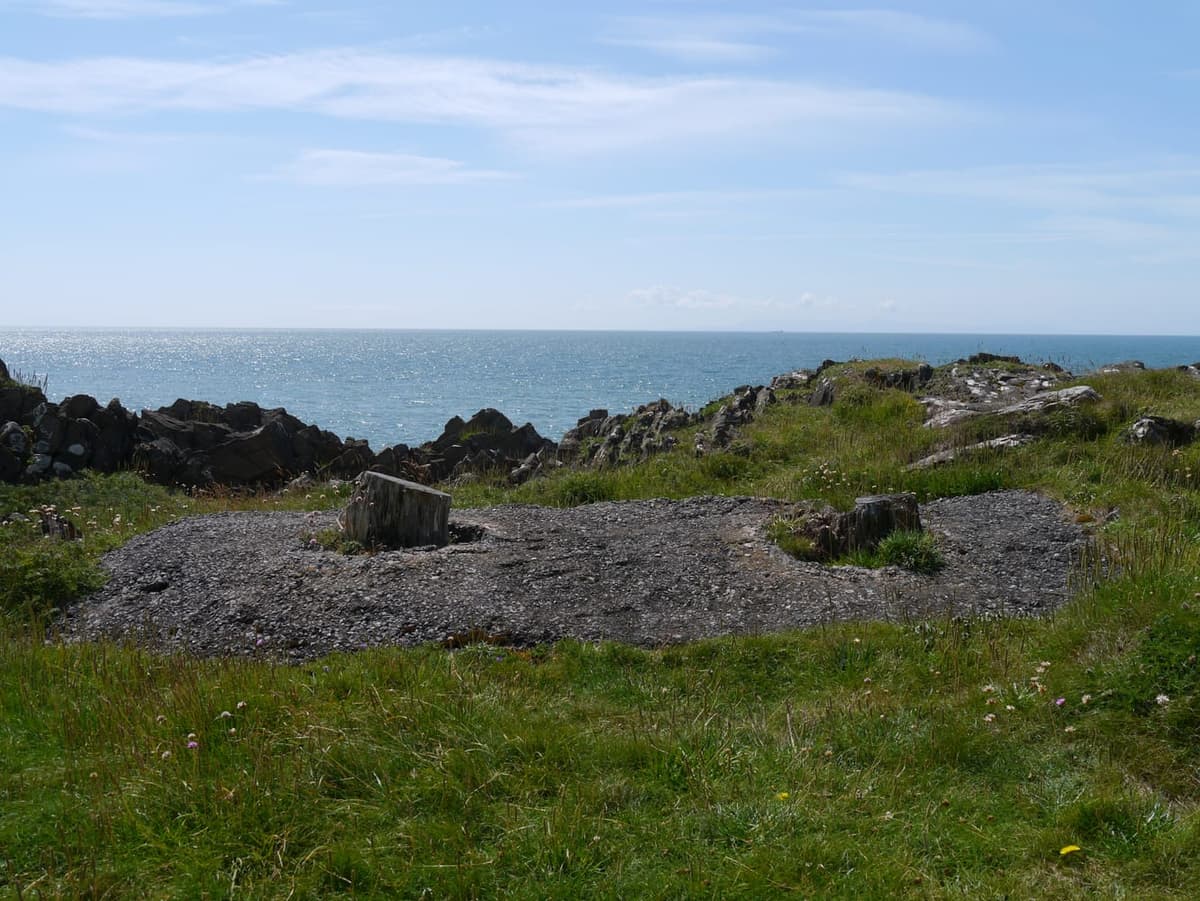
This is the trail's pilgrimage site: the headland where the wicker man was built and burned in the film's climax. Burrow Head lies a couple of miles past the Isle of Whithorn, and the clifftop is now part of the privately run Burrowhead Holiday Village, a caravan park.
For years the charred stumps of the structure's legs were visible; these have since been removed, though concrete footings linger. Access matters here: reaching the headland generally means crossing or skirting the private caravan park, and the Walkhighlands coastal route describes the public coastal path that runs along the cliff edge here. Be considerate of residents, follow any signage, and keep well back from the unfenced, crumbling cliff edges — this is genuinely rugged, exposed ground (more in Safety below).
Whithorn and the Isle of Whithorn
The nearby village of Whithorn — one of Scotland's earliest Christian sites — and the harbour at the Isle of Whithorn sit right beside Burrow Head and make a natural pairing with the finale stop. There's real history here beyond the film, including the Whithorn Trust's heritage attractions, so it's worth more than a drive-through.
St Ninian's Cave
A short walk down a wooded glen to a pebbly shore brings you to St Ninian's Cave, used for the beach-procession and the scene where Rowan is held. It's an ancient pilgrimage site, open to the public via a signed path and a beach walk; wear footwear that copes with shingle and seaweed.
Culzean Castle (Ayrshire)
Up on the Ayrshire coast, the clifftop Culzean Castle played Lord Summerisle's grand house. The exterior features in Howie's carriage approach, and the State Dining Room appears inside. Today the castle, gardens and country park are cared for by the National Trust for Scotland, near Maybole. The castle is typically open spring to early autumn (roughly late March–early November), about 10:30–16:30 with last entry around 16:00, while the country park is open year-round — but always confirm current dates, hours and ticket prices on the official NTS page before you go. It's an easy and spectacular add-on if you're flying into Prestwick.
A suggested road-trip route
Galloway's locations sit close together, so two to three days is plenty for the southern cluster (leave Plockton for a separate Highlands trip). A workable loop, broadly following the Scotland Starts Here Wicker Man itinerary:
- Day 1 — Kirkcudbright & Anwoth. Base in or near Kirkcudbright; walk the High Street locations, then drive out to Anwoth Old Kirk and Gatehouse of Fleet (Green Man exterior).
- Day 2 — Creetown, Newton Stewart & Whithorn. Work west and south through the smaller villages to the Machars peninsula, ending near Whithorn.
- Day 3 — Burrow Head, St Ninian's Cave & Culzean. Do the finale headland and cave in the morning, then drive north up the coast to finish at Culzean Castle before flying out of Prestwick.
Total driving is modest — the core Galloway sites are within an hour or so of each other — so build in time to actually enjoy the towns rather than just ticking off plaques.
Where to stay
- Kirkcudbright — the most characterful base: guesthouses, small hotels and self-catering in the artists' town.
- Newton Stewart — central and practical, with the widest spread of accommodation and shops for the cluster.
- Gatehouse of Fleet — quiet and pretty, handy for Anwoth and the western sites.
- Isle of Whithorn / Machars — closest to Burrow Head and St Ninian's Cave if you want an early start there; options are limited, so book ahead.
Galloway is a small, seasonal market — rooms in the best towns fill up in summer and around local events, so reserve early. If you want it sorted in one place, our holiday packages and trip planner can bundle flights, car hire and stays.
Safety and responsible film-tourism
This is the part fans most often get wrong, so take it seriously.
- Burrow Head is a working caravan park on rough coastal ground. It's private property with residents and holidaymakers. Don't trespass, follow signage, park considerately, and stick to the established coastal path. The cliffs are unfenced, eroding and dangerous — keep children and dogs close, stay back from the edge, and don't attempt it in high wind or after dark.
- Most "locations" are private homes and businesses. The Anwoth schoolhouse, the Plockton and Newton Stewart houses and many shopfronts are people's homes or livelihoods. Photograph from public ground, keep noise down, and never enter private property.
- Kirkyards are working graveyards. Anwoth Old Kirk and St Ninian's are places of worship and burial — visit quietly and respectfully.
- Leave no trace. Take litter away, don't light fires (especially poignant given the film), and respect Scotland's outdoor-access code on paths and farmland.
- Tides and terrain. St Ninian's Cave involves a shingle beach; check you can return safely. Galloway weather turns fast — carry waterproofs and tell someone your plan on the remote headlands.
Travel insurance is sensible for any active UK trip; it's a small add-on next to flights and car hire, and our travel insurance options cover the basics.
A note for Pakistani travellers
- UK visa. Pakistani passport holders need a UK Standard Visitor visa for tourism. Apply online, give biometrics at a visa centre in Karachi, Lahore or Islamabad, and apply well ahead — summer processing is slow. We can help you prepare and submit a strong application through our visa services.
- Flights. Fly into Glasgow (GLA), Edinburgh (EDI) or Glasgow Prestwick (PIK) — usually one stop via a Gulf or European hub from Karachi, Lahore or Islamabad, often routed through London or Manchester. Compare routes and dates on our flight search; flexible dates and a one-stop connection can cut the fare noticeably. From the airport, hire a car for the Galloway run.
Nearby and add-on ideas
Galloway pairs well with a wider Scotland trip. If you love old stones and ruined kirks, our roundup of the best archaeological sites in the world makes a good companion read, and outdoorsy travellers extending into a longer European tour might like our guide to the best campsites in Europe. For more destination inspiration, browse our destination guides.
FAQ
Where was The Wicker Man (1973) filmed?
Mostly in Dumfries & Galloway in southwest Scotland — around Kirkcudbright, Newton Stewart, Gatehouse of Fleet, Creetown, Anwoth, Whithorn and Burrow Head — with the seaplane-arrival scenes shot at Plockton in Wester Ross and Culzean Castle in Ayrshire standing in for Lord Summerisle's house.
Where was the wicker man burned?
The climactic burning was filmed on the clifftop at Burrow Head, a couple of miles past the Isle of Whithorn. The site is now part of the privately run Burrowhead Holiday Village caravan park, and the original structure's remains have been removed.
Can you actually visit the Burrow Head site?
You can reach the headland via the public coastal path, but it usually means crossing or skirting the private caravan park, so be respectful and follow signage. The cliffs are unfenced and eroding — stay well back from the edge and avoid it in bad weather.
How many days do I need for the Wicker Man trail?
Two to three days covers the Galloway cluster comfortably. Plockton is a 5–6 hour drive north, so treat it as a separate Highlands trip rather than part of the same outing.
What's the best airport for the Wicker Man locations?
Glasgow Prestwick (PIK) is closest to the Galloway sites — about 1¼ hours to Newton Stewart — and sits beside Culzean Castle. Glasgow and Edinburgh have more international flights but are 2–2½ hours' drive away. You'll need a hire car either way.
When is the best time to go?
May to September, with May and June usually driest, quietest and least midge-prone. Note that Culzean Castle and some smaller sites close over winter.
Conclusion
Few films give you such a complete, walkable map of themselves. Chasing The Wicker Man leads you through some of Scotland's loveliest and least-visited country — pastel harbour towns, a ruined kirk, an artists' colony and a wild Atlantic headland — and the film simply joins the dots. Go in late spring, drive the Galloway loop at an easy pace, tread lightly on the private land and graveyards that make the trail special, and you'll come away with far more than a horror-movie checklist: a genuinely memorable corner of southwest Scotland, and the strange thrill of standing where Summerisle once burned.
Written by
Travel.pk Editorial Desk
Researches and edits practical travel guidance for people planning journeys from Pakistan.
How we research and edit →Comments
Loading comments…