Publication and freshness
This article predates our verified-timestamp system; its original publication date was not reliably recorded, so no publication or freshness date is claimed.
Byline record
Editorial Desk byline. No personal contributor profile is claimed.
Sources and method
Inspect the primary-source links in the article and our research method. Changing rules must be rechecked at the official source.
Separate review record
No separately stored fact-checker or fact-check date is published for this article. Edit history: no recorded revisions since revision tracking began.
How to hike Richtis Gorge in eastern Crete — the route and difficulty, the year-round waterfall and swim, getting there from Sitia or Heraklion, what to pack, and when to go.
Tucked into the quiet, sun-baked hills of eastern Crete, Richtis Gorge is one of those rare Greek places that still feels like a secret. While crowds pile onto the beaches of the south coast, a thin ribbon of plane trees, running water and old stone bridges threads its way down to the sea — ending at a waterfall that, unusually for Crete, flows even in high summer.
This is a hiking guide for travellers who want the real thing: cool shade, a swim under a 20-metre cascade, and a wild pebble beach at the bottom that you reach on foot. It is a moderate walk, not a technical climb, but it rewards a little planning — the right shoes, enough water, and a sensible eye on the weather.
Below you'll find where Richtis Gorge is, how to drive there, the hike route and timing, when the waterfall runs, what to pack, and how to fold it into a wider eastern-Crete trip taking in Vai palm beach, Sitia and Agios Nikolaos — plus a short note for Pakistani travellers on the Schengen visa and flights to Crete.
Quick facts
| Where | Lasithi (Lassithi) prefecture, eastern Crete; Sitia municipality, between Agios Nikolaos and Sitia |
| Trailhead | Stone-arched Lachanas Bridge, just outside Exo Mouliana village |
| Gorge length | About 5 km; roughly 3 km of actual gorge walking to Richtis beach |
| Descent | About 350 m from the village down to the sea |
| Waterfall | Around 20–25 m high, with a natural plunge pool you can swim in |
| Hike time | Bridge to waterfall ~1.5 hrs; full route to the beach ~3–4 hrs there and back |
| Difficulty | Moderate — sturdy footwear and basic fitness needed |
| Water flow | Runs year-round (rare in Crete); strongest in spring, lower in late summer |
| Best months | April–June and September–October |
| Entry | Generally free parking; a small seasonal fee may apply — check on site |
Why visit Richtis Gorge
Most of Crete's famous gorges — Samaria, Imbros — are long, dry and dramatic, carved through bare limestone. Richtis is different. It's smaller, greener and wetter, more of a hidden forest valley than a canyon. The Richtis stream runs all year, which is genuinely unusual on this island, feeding a dense canopy of plane (platanus) trees, oleander, sage and wild herbs the whole way down (Cretan Beaches; Wikipedia).
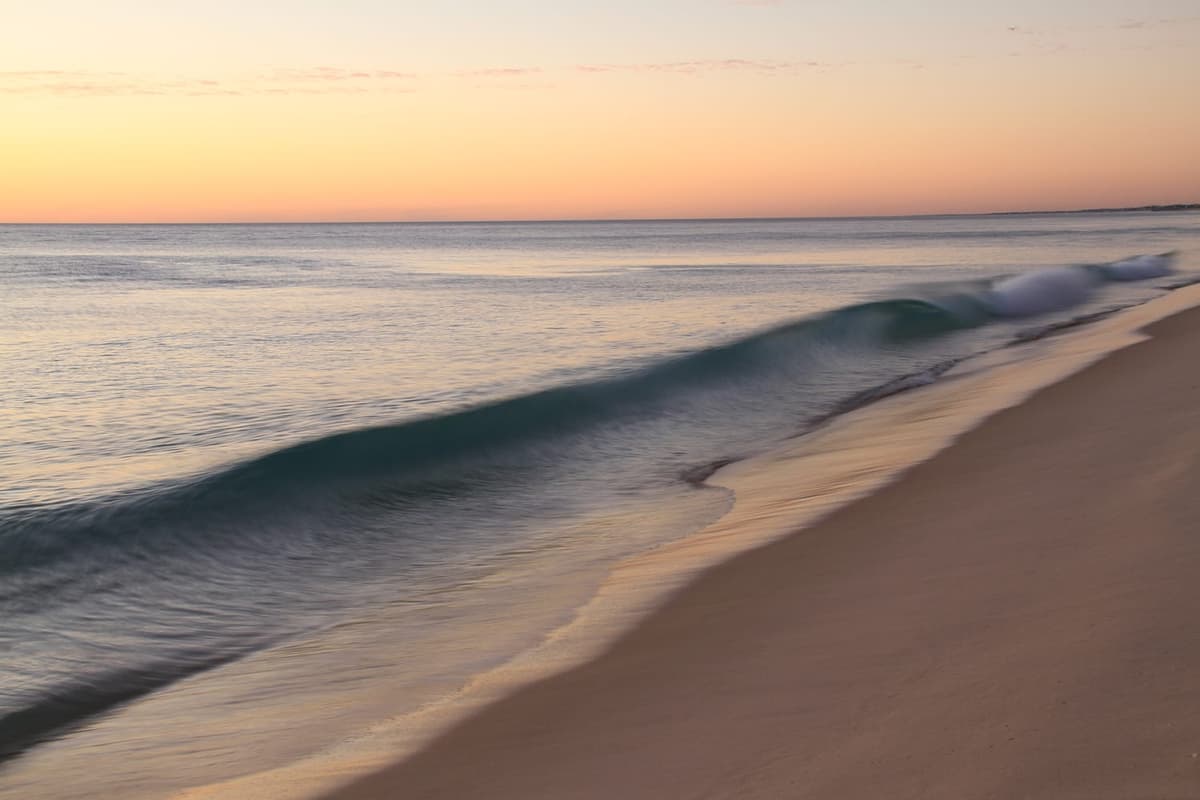
The headline is the Richtis Waterfall, a cascade of roughly 20–25 metres dropping into a clear green pool — and unlike many Cretan falls, it doesn't dry to a trickle in July. You can swim underneath it. Along the way the trail crosses old stone bridges and passes the ruins of water mills that once ground the valley's grain, plus the elegant 19th-century Lachanas Bridge at the top. The walk finishes at Richtis beach, a wild, dark-pebble cove backed by hills, where almost no one is around.
For a half-day that combines a shaded forest walk, a waterfall swim and a quiet beach, very little in Crete competes.
Best time to visit
Richtis is walkable most of the year, but the experience changes a lot by season.
- Spring (April–June) is the sweet spot. The stream is full, the waterfall is at its most powerful, the gorge is green and flowering, and temperatures are comfortable for walking.
- Autumn (September–October) is the second-best window: warm enough to swim, fewer people, and pleasant hiking weather. Water flow is lower than spring but the falls still run.
- Mid-summer (July–August) is hot. The shade helps, but bring extra water; the waterfall is reduced but still flows, and the swimming pool is a serious reward at the end.
- Winter (roughly November–March) is the one to be careful with. Heavy rain swells the stream and brings a real flash-flood risk inside a narrow gorge, plus slippery rock. Most guides advise against winter hikes here (Rental Center Crete).
Aim for a morning start in any season to beat the heat and have the trail largely to yourself.
How to get there
Richtis Gorge sits in the far east of Crete, so factor in driving time. A rental car is by far the easiest way to reach it — public buses run along the Heraklion–Sitia national road and can drop you near Exo Mouliana, but you'll still want wheels for the wider area.
Approximate driving distances (Rental Center Crete):
- From Heraklion: about 114 km — roughly a 2-hour drive east.
- From Agios Nikolaos: about 48 km — around 55 minutes.
- From Sitia: about 17.5 km — around 20 minutes (the closest base).
The village of Exo Mouliana sits right on the main coastal road. From there, a narrow paved lane drops about 1.2 km down to the Lachanas Bridge, the classic upper trailhead. You can park up in the village and walk down, or carefully drive the lane to the bridge and park there.
Two ways to do it
- The full gorge walk (top-down): Start at the Lachanas Bridge near Exo Mouliana and follow the streambed down through the gorge to the waterfall (about 1.5 hours), then continue to Richtis beach. This is the proper hike.
- The short cut to the falls (bottom-up): If you have young children or limited mobility, drive the narrow paved road all the way down to Richtis beach, then walk up the gorge for around 30–40 minutes to reach the waterfall and turn back (Cretan Beaches).
There is free parking at the Lachanas Bridge, in Exo Mouliana, and at Richtis beach. Note that some visitors report a small seasonal entry fee (around €3); it isn't universally charged, so carry a little cash and check on the day.
The hike: route, difficulty and the waterfall
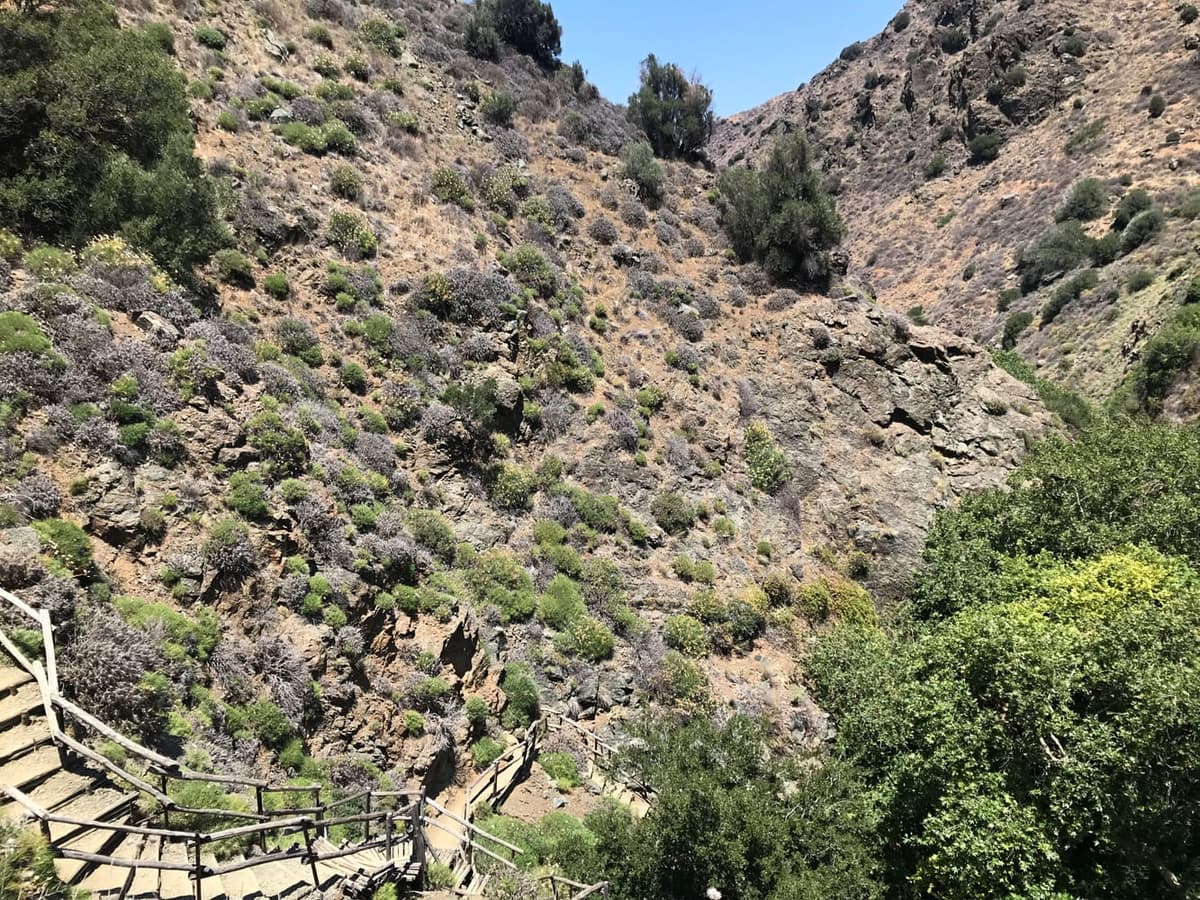
The gorge is a moderate walk — not a scramble, but not a stroll either. From the Lachanas Bridge the path follows the bed of the Richtis (Lachana) stream downhill, crossing the water repeatedly on stepping stones and small bridges. The total descent to the beach is around 350 metres over roughly 3 km of gorge (Wikipedia).
Expect:
- Stream crossings on rocks — your feet may get wet, and the rocks are slippery.
- Uneven, rooty ground under heavy shade, with a few steeper, rougher sections where you'll use your hands.
- Old stone bridges and water-mill ruins along the way — small, photogenic reminders that people farmed this valley for centuries.
Reaching the Richtis Waterfall from the bridge takes roughly 1.5 hours. The fall drops about 20–25 metres into a green pool ringed by rock and plane trees, and there's enough water for a cold, refreshing swim even in summer. Many walkers stop here, swim, and either continue down to the beach or turn back the way they came.
From the waterfall it's another 30–40 minutes down to Richtis beach, a remote dark-pebble cove on the north coast. Budget 3–4 hours for the round trip if you walk down to the sea and back up — and remember that the return is uphill in the heat.
What to pack and wear
Richtis is forgiving, but a few things make a real difference:
- Proper footwear. Closed hiking shoes or trail trainers with grip — not flip-flops. The wet rocks are the single biggest cause of slips.
- More water than you think. At least 1.5–2 litres per person in summer; there are no shops in the gorge.
- Swimwear and a quick-dry towel for the waterfall pool and the beach.
- Sun protection (hat, sunscreen) for the exposed top section and the beach, even though the gorge itself is shady.
- Snacks, a small first-aid kit, and a fully charged phone — but don't rely on signal; coverage is patchy inside the gorge.
- A light layer in spring or autumn for shade and breeze.
Costs and booking notes
Richtis is a cheap day out. The walk itself is free (with the small possible seasonal fee noted above), so your main costs are transport and food.
- Car hire in Crete is the big-ticket item — budget broadly €30–€60 per day in season, less off-peak; book ahead in July–August.
- Fuel for the drive east from Heraklion or Agios Nikolaos.
- Lunch in Exo Mouliana or back in Sitia at a village taverna — inexpensive and excellent.
There's nothing to pre-book for the gorge itself. If you'd rather not drive, several operators run guided Richtis Gorge hikes out of Sitia, which handle transport and a guide for a set fee.
Safety and practical tips
A gorge is a beautiful but unforgiving environment. Keep these in mind:
- Watch the weather. Never enter Richtis during or just after heavy rain — narrow gorges flash-flood fast, and this is the main serious hazard. Winter walks are best avoided (Rental Center Crete).
- Mind the rocks. Wet, mossy stones at the crossings are slippery; take them slowly and use hands and trekking poles where needed.
- Respect the timing. Several rescues here have happened because walkers underestimated how long the return uphill takes. Start early and turn back with plenty of daylight.
- Carry water and don't overheat. In summer, heat exhaustion is a genuine risk on the open sections.
- Go with someone, tell a person where you're headed, and don't count on phone signal in the bottom of the gorge.
Eastern Crete: a short itinerary
Richtis pairs naturally with the under-visited far east of the island. A relaxed 2–3 day loop, based in or near Sitia, could look like this:
- Day 1 — Richtis Gorge. Morning hike to the waterfall and beach, lunch in Exo Mouliana or Sitia. On the way you can detour to the historic Toplou Monastery, only about 3 km off the route.
- Day 2 — Vai and the east coast. Drive to Vai, home to Europe's largest natural palm forest and a golden beach (about 39 km from the gorge), then explore the laid-back harbour town of Sitia in the evening.
- Day 3 — Agios Nikolaos. Head west to Agios Nikolaos (about 48 km), built around the pretty Lake Voulismeni, with cafés, swimming and a short hop to the island of Spinalonga.
For a longer Crete trip, our destination guides and trip planner can help you stitch the island together, and you can browse curated holiday packages if you'd rather have it arranged for you. If your travel dates are flexible, our month-by-month holiday weather guide is a good sanity-check for the wider Mediterranean. And if you like mixing nature with history, Crete's Minoan sites slot neatly alongside the world's best archaeological sites.
Notes for Pakistani travellers
Crete is part of Greece, which is in the Schengen Area, so Pakistani passport holders need a Schengen short-stay (Type C) visa before travelling. Key points for 2026:
- The visa covers stays of up to 90 days within any 180-day period.
- The standard adult visa fee is around €90, plus a service charge if you apply through VFS/TLScontact.
- You'll need a passport valid for at least six months beyond your trip with two blank pages, return flights, accommodation proof, bank statements, and travel medical insurance with at least €30,000 cover (Greek MFA — Schengen requirements).
- Always confirm the latest fees, documents and appointment process on the official Greek consular and embassy channels before applying.
You can start your application planning through our visa services page, and add travel insurance that meets the Schengen cover requirement.
For flights, there are no direct services from Pakistan to Crete. The usual routing from Karachi, Lahore or Islamabad is via a European or Gulf hub to Athens, then a short onward hop to Heraklion (HER) — Crete's main airport — from where it's roughly a 2-hour drive east to Richtis. Tiny Sitia airport (JSH) is closer to the gorge but has very limited connections, so most visitors fly into Heraklion (or Chania) and drive. Compare routes and fares on our flight search.
FAQ
Where is Richtis Gorge in Crete?
It's in the Lasithi prefecture of eastern Crete, in the Sitia municipality, between the towns of Agios Nikolaos and Sitia. The hike starts near Exo Mouliana village and ends at Richtis beach on the north coast.
How long does the Richtis Gorge hike take?
From the Lachanas Bridge to the waterfall is about 1.5 hours one way. Walking the full route down to Richtis beach and back takes roughly 3–4 hours, with around 350 m of descent (and the same climb on the way up).
Does the Richtis waterfall always have water?
Yes — unusually for Crete, the Richtis stream runs year-round, so the waterfall flows even in summer, though it's most powerful in spring. By late summer the flow is reduced but the swimming pool still holds water.
Is the Richtis Gorge hike difficult?
It's rated moderate. There's no technical climbing, but you'll cross the stream on slippery rocks, navigate uneven, rooty ground, and face an uphill return. Sturdy shoes and basic fitness are enough; it isn't ideal for very young children unless you take the short bottom-up route from the beach.
Can you swim at the Richtis waterfall?
Yes. There's a natural plunge pool beneath the falls where hikers swim, and the dark-pebble Richtis beach at the bottom of the gorge is also good for a dip.
When should I avoid Richtis Gorge?
Avoid it during and right after heavy rain, and generally in winter, when the narrow gorge can flash-flood and the rocks are dangerously slick. The safest, most scenic windows are April–June and September–October.
Is there an entrance fee?
Parking is generally free, but some visitors report a small seasonal fee (around €3) at busy times. It isn't always charged, so carry a little cash and check on the day.
Final word
Richtis Gorge is eastern Crete at its best: a short, shaded, green hike that ends with a waterfall swim and a wild beach all to yourself. Go in spring or autumn, wear real shoes, carry plenty of water, keep an eye on the weather, and give yourself the morning. Pair it with Vai, Sitia and Agios Nikolaos and you've got one of the most rewarding low-key adventures the island offers — far from the crowds, and well worth the drive east.
Written by
Travel.pk Editorial Desk
Researches and edits practical travel guidance for people planning journeys from Pakistan.
How we research and edit →Comments
Loading comments…