Publication and freshness
This article predates our verified-timestamp system; its original publication date was not reliably recorded, so no publication or freshness date is claimed.
Byline record
Editorial Desk byline. No personal contributor profile is claimed.
Sources and method
Inspect the primary-source links in the article and our research method. Changing rules must be rechecked at the official source.
Separate review record
No separately stored fact-checker or fact-check date is published for this article. Edit history: no recorded revisions since revision tracking began.
Visit the five Normandy D-Day landing beaches — Utah, Omaha, Gold, Juno and Sword — plus the cemeteries, Pointe du Hoc and museums, with practical tips from a Bayeux base.
On 6 June 1944, more than 130,000 Allied troops came ashore along an 80-kilometre stretch of the Normandy coast in the largest seaborne invasion in history. Today that coastline is one of the most moving places you can visit in France: five quiet beaches, white-cross cemeteries, cliff-top battery ruins, and small museums that explain how the liberation of Western Europe began here.
This guide treats Normandy as both a travel destination and a place of remembrance. It covers the five landing beaches, the cemeteries and memorials you should not miss, how to reach them from Paris, when to go, what it costs, and how to visit respectfully — because many of these sites are war graves. We use the town of Bayeux as a practical base, since it is the easiest place to stay, eat, and reach every beach within about 45 minutes.
A short note for Pakistani travellers is included near the end, with visa and flight pointers, but the planning advice here works for anyone.
Quick facts
| Where | Calvados coast, Normandy, northwest France |
| The five beaches | Utah & Omaha (US), Gold & Sword (British), Juno (Canadian) |
| Best base | Bayeux (also Caen for the big museum) |
| From Paris | Direct train to Bayeux ~2h15–3h15 from Paris Saint-Lazare |
| Time needed | 1 day for highlights, 2 days to do it justice |
| Standout sites | Normandy American Cemetery, Pointe du Hoc, Arromanches, Caen Memorial |
| Best time | May–September; 6 June is the D-Day anniversary (very busy) |
| Typical day cost | Roughly €60–€150+ per person depending on tour vs. self-drive |
| Tone | Active war graves — visit quietly and respectfully |
Why visit the Normandy beaches
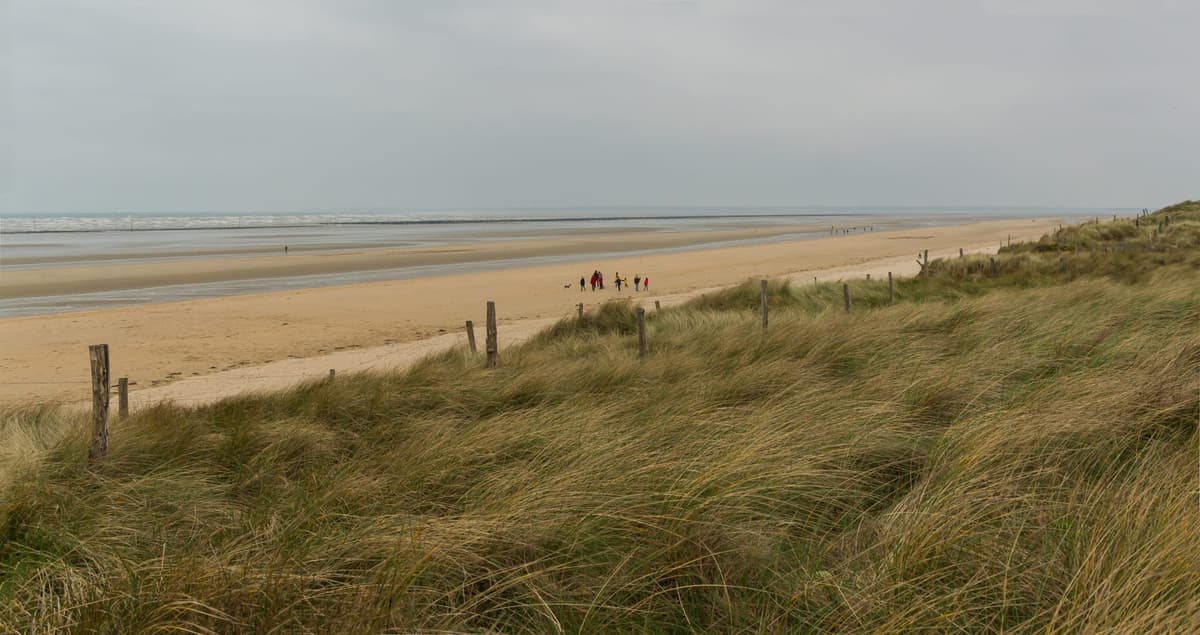
The D-Day landings were the turning point of the Second World War in Western Europe. The Allies divided the assault coast into five sectors, code-named from west to east: Utah and Omaha (assaulted by US forces), Gold and Sword (British), and Juno (Canadian), according to the Imperial War Museums. Omaha was the most heavily defended and saw the worst casualties; Utah was taken with comparatively few losses.
What makes Normandy unforgettable is how little has changed. You can stand on the actual sand where the landings happened, look up at the cliffs the US Rangers scaled at Pointe du Hoc, and walk among nearly ten thousand graves above Omaha Beach. The countryside is green, the seaside towns are pretty, and the people of Normandy take the memory of 1944 seriously. It is history you can walk through rather than read about.
Best time to visit
The beaches and outdoor memorials are open year-round, but the experience changes a lot with the season.
- May to September is the sweet spot: long daylight, mild weather, and every museum open with full hours.
- Spring and autumn shoulders (April, October) are quieter and cheaper, with crisp coastal light — bring layers and a waterproof.
- Winter is bleak and windy, but evocative and nearly empty; some smaller museums reduce hours.
The single most important date to know is 6 June, the D-Day anniversary. Around this date there are official ceremonies, re-enactors, parades, and sometimes visiting veterans and heads of state. It is deeply moving but extremely busy — hotels in Bayeux and along the coast book out months ahead and prices spike. Major round-number anniversaries (the 80th was in 2024) are busiest of all. If you want the ceremonies, book very early; if you want quiet reflection, avoid the first week of June.
How to get there from Paris
Normandy is an easy trip from Paris, and you have three main options.
By train (easiest without a car)
Direct trains run from Paris Saint-Lazare to Bayeux (and to Caen) several times a day. The journey takes roughly 2h15 to 3h15 depending on the service, per SNCF Connect and Trainline. Bayeux's small station puts you within walking distance of the town centre and most tours' pickup points. Book in advance for the cheapest fares.
By rental car (most flexible)
The drive from Paris is about 2.5–3 hours via the A13. A car is the most flexible way to see the beaches at your own pace, especially if you want to combine the American sectors (Omaha, Utah, Pointe du Hoc) with the British and Canadian beaches further east in one trip. You can also rent a car after taking the train to Bayeux or Caen. Note that the sites are spread along ~80 km of coast, so without a car you will rely on tours or limited local buses.
By guided day tour (most context)
Many travellers take a guided tour from Bayeux or Caen, and for first-timers this is often the best choice. Licensed guides bring the battle to life on the ground, handle all the driving, and pack the key sites into one day. Operators based in Bayeux note that all five beaches plus Pointe du Hoc and the American cemetery sit within about 45 minutes of town, as described by Bayeux Bessin Tourisme. Tours range from shared small-group half-days to private full-day cars; some let you use your own rental car with a guide aboard.
What to see and do
You cannot do everything in a day, so prioritise. Here are the essential sites.
The five landing beaches
- Utah Beach — the westernmost US beach, taken with relatively light casualties; a good landing museum sits on the dunes.
- Omaha Beach — the most heavily defended sector and the most sobering, with a long sweep of sand below the American cemetery and a striking steel memorial sculpture.
- Gold Beach — the central British sector, near Arromanches and the Mulberry harbour remains.
- Juno Beach — the Canadian sector, home to the Juno Beach Centre, Canada's museum of the war.
- Sword Beach — the easternmost beach, assaulted by British forces, close to Ouistreham and Pegasus Bridge.
The west-to-east order and national assignments are confirmed by the Imperial War Museums.
Normandy American Cemetery, Colleville-sur-Mer
Set on the bluff directly above Omaha Beach, this is the most visited and most affecting memorial in Normandy — nearly 9,400 American graves in perfect white rows overlooking the sea. The visitor centre tells individual soldiers' stories. According to Normandy Tourism, the cemetery and visitor centre are typically open daily from about 9:00 to 16:45 (with last admission a little earlier), and entry is free. Always confirm current hours and any closures with the operator, the American Battle Monuments Commission, before you go.
Pointe du Hoc
A clifftop former German battery between Utah and Omaha, where US Army Rangers famously scaled 30-metre cliffs under fire on 6 June. The cratered ground, bunkers and command post are largely as they were left, and a modern visitor centre explains the assault. Per the American Battle Monuments Commission, the site is free, open year-round, and the visitor centre runs roughly 9:00–18:00 in summer (Apr–Sep) and 9:00–17:00 the rest of the year. It is one of the few places where you can really feel the violence of the day.
Arromanches and the Mulberry harbour
At Arromanches-les-Bains you can still see the concrete caissons of the Mulberry harbour — the artificial port the Allies floated across the Channel to land supplies before a real port was captured. The seafront Musée du Débarquement (recently renovated) overlooks the remains and explains the engineering feat; the nearby 360° cinema adds archive footage. See Normandy Tourism for details.
The Caen Memorial (Mémorial de Caen)
If you visit only one indoor museum, make it this one. The Mémorial de Caen is a large, superb museum covering the Second World War, D-Day and the Cold War, and many guided beach tours depart from here. Allow around four hours. Per the official museum site, full adult admission is around €20–21, with reduced rates for children, students and seniors; check the opening times page for seasonal hours and closure dates.
Bayeux itself
Beyond being your base, Bayeux is worth time in its own right: the famous medieval Bayeux Tapestry, a beautiful cathedral, and the Bayeux War Cemetery, the largest Commonwealth war cemetery of the 1944 Battle of Normandy. It is also the first major town the Allies liberated.
Suggested 1–2 day itinerary
One day (American sectors, the classic route): Start early. Pointe du Hoc → Omaha Beach → Normandy American Cemetery (allow plenty of time here) → lunch in a coastal village → Arromanches and the Mulberry harbour → back to Bayeux. This is the route most one-day tours follow.
Two days (the full coast):
- Day 1 — American sectors: Utah Beach museum → Pointe du Hoc → Omaha Beach → Normandy American Cemetery.
- Day 2 — British & Canadian sectors + museum: Arromanches/Mulberry → Gold Beach → Juno Beach Centre → Pegasus Bridge near Sword Beach → finish at the Mémorial de Caen (or do the Caen Memorial first thing on Day 1).
Two days lets you slow down, read the cemetery panels, and avoid rushing past graves to keep a schedule.
Costs and booking notes
Your budget depends mostly on whether you self-drive or take a guided tour:
- Train Paris–Bayeux: advance fares can start low (in the teens of euros) and rise closer to departure — book early.
- Guided full-day tour from Bayeux/Caen: typically €70–€150+ per person for small-group tours; private tours cost more.
- Car rental: roughly €40–€80/day plus fuel, often cheaper than two or more tour tickets for a couple or family.
- Museum entries: Caen Memorial around €20–21; landing museums and the Juno Beach Centre generally €8–€15 each. The American Cemetery and Pointe du Hoc are free.
- Accommodation in Bayeux: wide range; expect mid-range hotels and B&Bs, with the highest prices around 6 June.
A sensible day budget is roughly €60–€150 per person all-in, scaling up for private tours and peak dates. Always check current prices on the official pages linked above, as fees change.
Respectful visitor etiquette
These are not theme parks — many are active war graves and cemeteries. Please:
- Keep your voice low and your behaviour calm at cemeteries and memorials.
- Do not picnic, play music, or take light-hearted "fun" photos among the graves; avoid posing on headstones or memorials.
- Dress reasonably — you are visiting a place of mourning.
- Follow signs at the beaches: some areas have preserved bunkers and unstable ground; stay on marked paths at Pointe du Hoc.
- Take nothing as a souvenir from the sites, and carry out all litter.
A few minutes of quiet reflection at the American Cemetery or among the graves at Bayeux says everything about why these places are protected.
Safety and practical tips
- Weather: the coast is breezy and changeable even in summer. Bring layers, a waterproof, and comfortable walking shoes for sandy, uneven ground.
- Plan transport ahead: public transport between beaches is limited. Decide early between car, tour, or train-plus-tour.
- Book June well ahead: anything near the 6 June anniversary needs reservations months in advance.
- Time the cemetery right: the American Cemetery closes mid-to-late afternoon — visit it before, not after, your other stops.
- Carry water and snacks: outdoor sites like Pointe du Hoc have limited facilities.
- Verify hours: opening times shift seasonally; confirm on official pages the week of your trip.
For Pakistani travellers: visa and flights
Normandy sits inside France, a Schengen country, so Pakistani passport holders need a Schengen short-stay (Type C) visa, which allows up to 90 days in any 180-day period across the zone. The standard adult visa fee is around €90 plus a service-centre charge, and processing typically runs about 15–30 working days, per Wego's Pakistan Schengen guide. Apply through the official French portal, france-visas.gouv.fr, and the appointed visa centre; show confirmed flights, accommodation, travel insurance, and sufficient funds. Start our visa services early — summer slots fill fast.
There are no direct flights from Pakistan to Normandy; fly into Paris (CDG) from Karachi, Lahore or Islamabad (usually with one stop), then take the train onward to Bayeux. Compare fares and routes on our flight search, and consider travel insurance, which is in any case a Schengen requirement.
Nearby and itinerary ideas
If you have more time in the region, Mont-Saint-Michel is around 1.5 hours west and pairs beautifully with the beaches over a long weekend. History-minded travellers planning a wider European route may enjoy our guides to the Tower of London and to the world's best archaeological sites, or can browse more destination guides and start mapping a trip with our trip planner.
Frequently asked questions
How many days do you need for the D-Day beaches?
One full day covers the highlights — Pointe du Hoc, Omaha Beach, the American Cemetery and Arromanches. Two days lets you add the British and Canadian sectors (Gold, Juno, Sword) and the Caen Memorial museum without rushing, which is ideal if you have the time.
Should I base myself in Bayeux or Caen?
Bayeux is the most convenient base: it is small, walkable, close to the beaches (most are within ~45 minutes), and the starting point for many tours. Caen is larger and home to the excellent Mémorial de Caen museum, but is slightly further from the western American sectors. Many visitors stay in Bayeux and visit the Caen Memorial as a day trip.
How do I get from Paris to the Normandy beaches without a car?
Take a direct train from Paris Saint-Lazare to Bayeux (about 2h15–3h15), then join a guided tour or hire a car locally. There is no train along the beaches themselves, so a tour or car is needed once you arrive.
Is the Normandy American Cemetery free to visit?
Yes. The Normandy American Cemetery at Colleville-sur-Mer and its visitor centre are free, as is Pointe du Hoc, both managed by the American Battle Monuments Commission. Most museums (Caen Memorial, the landing museums, Juno Beach Centre) charge admission. Always confirm current hours before visiting.
When is the D-Day anniversary and is it worth visiting then?
The anniversary is 6 June, marking the 1944 landings. There are ceremonies and events, which can be very moving, but the coast is extremely crowded and accommodation sells out months ahead at premium prices. For quiet reflection, visit outside the first week of June.
Do Pakistani travellers need a visa for Normandy?
Yes. France is in the Schengen area, so Pakistani passport holders need a Schengen short-stay (Type C) visa, typically costing around €90 plus service fees, with processing of roughly 15–30 working days. Apply through france-visas.gouv.fr and your visa centre, and start early.
Conclusion
The Normandy beaches reward travellers who come with curiosity and respect. Whether you stand on Omaha sand, climb among the craters of Pointe du Hoc, or pause among the white crosses above the sea, you leave understanding 6 June 1944 in a way no book delivers. Base yourself in Bayeux, give it a day or two, time your visit outside the June crush unless you want the ceremonies, and treat every cemetery as the war grave it is. Then begin your planning with our flight search and visa services, and let Normandy do the rest.
Written by
Travel.pk Editorial Desk
Researches and edits practical travel guidance for people planning journeys from Pakistan.
How we research and edit →Comments
Loading comments…