Publication and freshness
This article predates our verified-timestamp system; its original publication date was not reliably recorded, so no publication or freshness date is claimed.
Byline record
Editorial Desk byline. No personal contributor profile is claimed.
Sources and method
Inspect the primary-source links in the article and our research method. Changing rules must be rechecked at the official source.
Separate review record
No separately stored fact-checker or fact-check date is published for this article. Edit history: no recorded revisions since revision tracking began.
A guide to Crathes Castle near Banchory, Aberdeenshire — its painted ceilings, the walled garden with 1702 yew hedges, estate trails and Go Ape, plus tickets, best time to visit and how to get there.
Pink-harled walls, fairy-tale turrets, and one of the great gardens of Scotland sitting just beyond the front door — Crathes Castle is the kind of place that rewards both the history-lover and the person who simply wants to wander among flowers for an afternoon. It stands on Royal Deeside in Aberdeenshire, a 16th-century tower house that the Burnett of Leys family lived in for almost 350 years before handing it to the National Trust for Scotland.
Inside are rare painted ceilings and original Jacobean furniture; outside is a walled garden hedged by yews planted over three centuries ago, ringed by woodland trails and a treetop adventure course. It is compact enough for a half-day yet varied enough to fill a full one, and it sits within easy reach of Aberdeen, making it one of the most accessible "proper Scottish castle" experiences in the northeast.
This guide covers the tower house and its famous ceilings, the garden and yew hedges, the estate trails and Go Ape, the best time to visit, tickets and opening seasons, how to get there near Banchory, and a Royal Deeside add-on to round out your trip — plus a short note for travellers flying in from Pakistan.
Quick facts
| What | 16th-century tower house, walled garden & 240-hectare estate |
| Where | Near Banchory, Royal Deeside, Aberdeenshire AB31 5QJ |
| Distance from Aberdeen | ~25 km / ~15 miles west, off the A93 |
| Run by | National Trust for Scotland (a charity) |
| Built | Begun 1553, completed 1596 by Alexander Burnett of Leys |
| Garden highlight | Walled garden with Irish yew topiary hedges dating from 1702 |
| On-site activity | Go Ape treetop adventure (booked separately) |
| NTS members | Free entry (membership covers the castle, garden & estate) |
| Best time | June–August for the borders; spring for snowdrops & blossom |
Opening seasons and prices change year to year, and the castle interior in particular often runs a shorter season than the garden. Always confirm the latest on the official Crathes Castle page before you travel.
Why visit
Crathes is a real survivor. Construction began in 1553 and the tower house was completed in 1596 by Alexander Burnett of Leys, on land granted to the family by Robert the Bruce back in 1323 (Wikipedia). Unlike many Scottish castles that are roofless ruins, Crathes was lived in continuously for centuries, so it still feels like a home rather than a relic — turreted, harled pink, and crammed with the kind of detail you only get from a family that never moved out.
The headline treasures are the Scottish Renaissance painted ceilings, among the best-preserved in the country. Three Jacobean rooms — the Chamber of the Muses, the Chamber of the Nine Worthies, and the Green Lady's Room — carry vivid early-17th-century painted decoration on their timber boards. You will also see original 1597 furniture, including a carved bed and caquetoire chairs marked with the family's initials and heraldry. Look out, too, for the Horn of Leys, an ancient ivory hunting horn said to have been given to the family by Robert the Bruce and long treated as the talisman of the estate.
Then there is the garden — and for many visitors, the garden is the reason to come.
The walled garden and the ancient yews
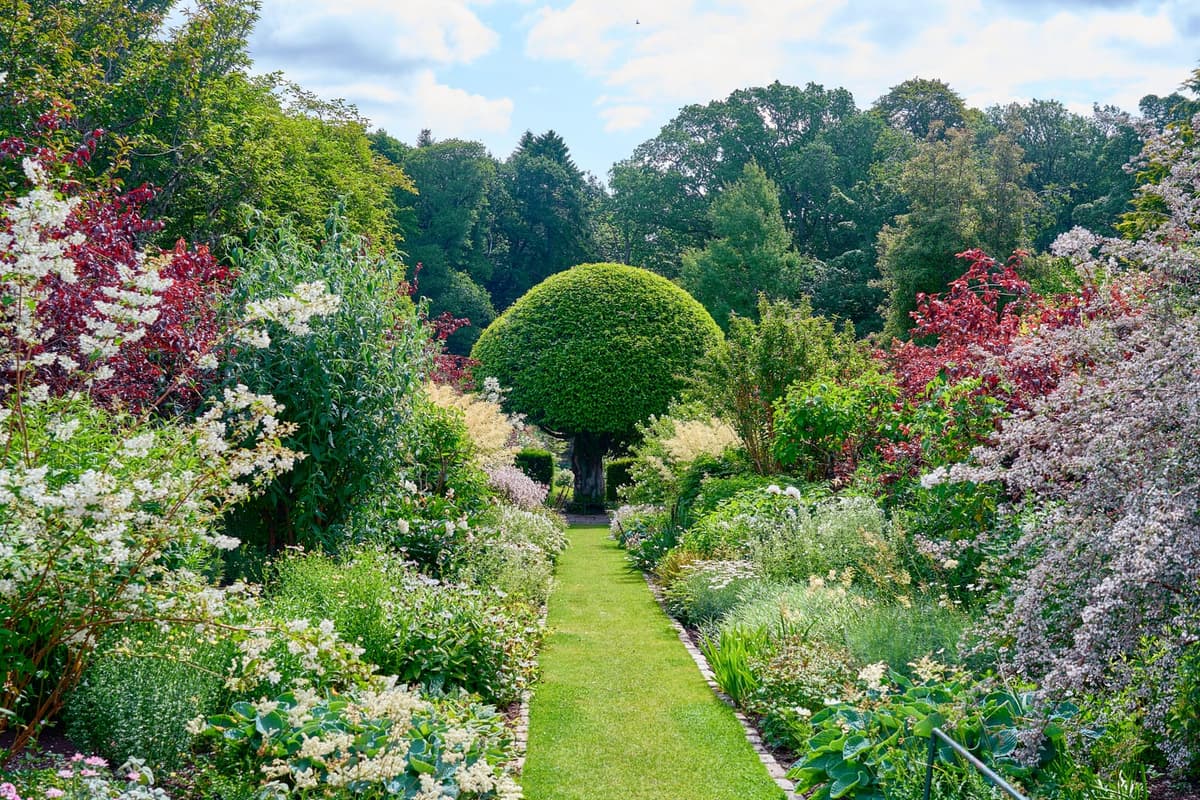
Crathes' walled garden runs to roughly 1.5 hectares and is one of the most admired in Scotland. Its signature feature is the set of Irish yew topiary hedges dating from around 1702, now grown into great rounded green walls that divide the garden into eight distinct themed "rooms" (Wikipedia). Walking between them feels like moving through a series of outdoor chambers, each with its own planting and mood.
Within those green walls sit gravel paths and deep herbaceous borders packed with specimen plants — the famous double herbaceous borders peak in high summer, when the colour is at its richest. There are themed areas devoted to particular colours and plant families, glasshouses, and old trained fruit on the walls. It is a garden that has been planted, replanted, and loved for centuries, and it shows.
If you only have time for one part of Crathes, make it the walled garden — ideally on a warm afternoon between June and August.
The estate, trails and Go Ape
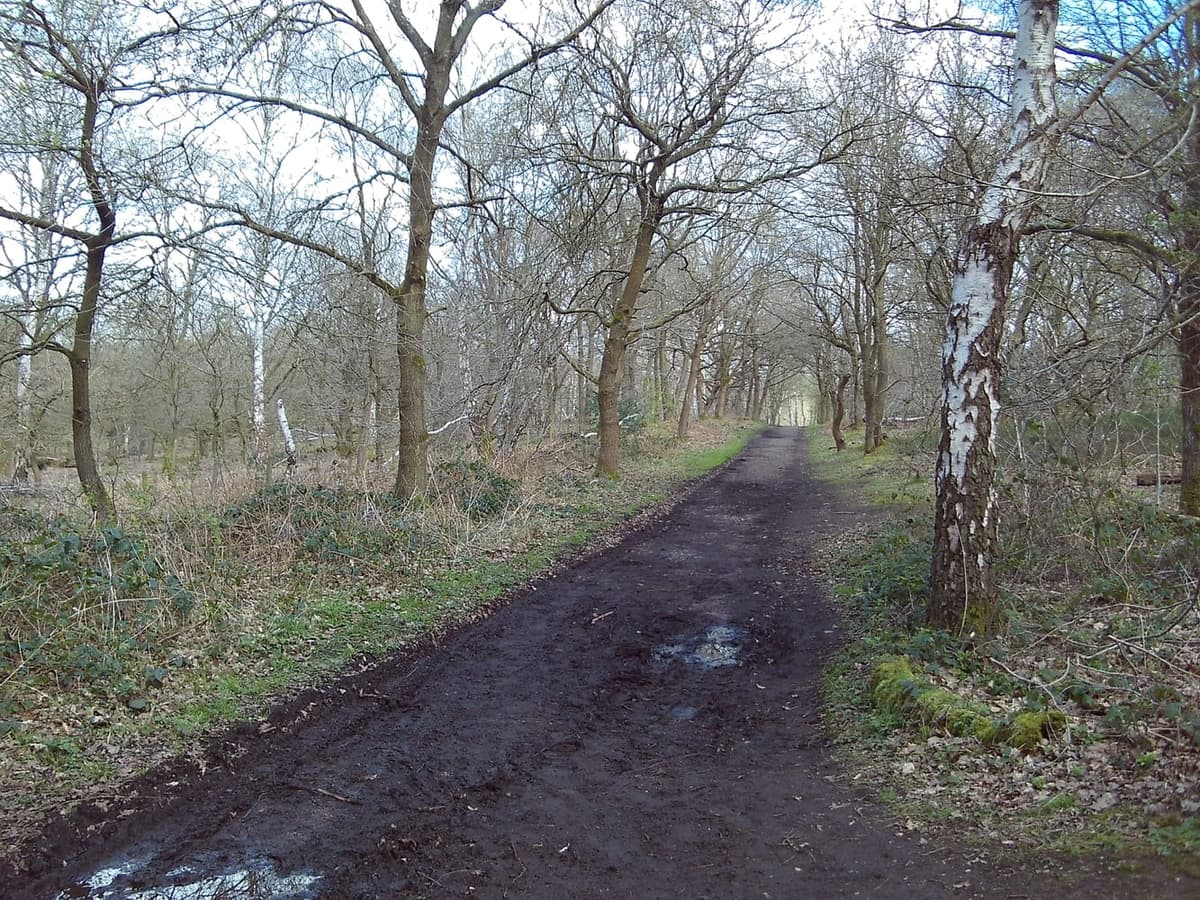
Beyond the formal garden, the Crathes estate stretches across about 240 hectares (590 acres) of woodland, parkland and farmland. A network of way-marked trails of varying lengths winds out from the castle through the grounds — short strolls suitable for families, and longer walks for those who want a proper leg-stretch among mature trees and along the burn. They are a lovely, free way to extend a visit and see the castle from a distance, framed by Deeside countryside.
For more of an adrenaline hit, the estate is home to a Go Ape treetop adventure course — high ropes, rope ladders, crossings and zip lines strung through the canopy. It is run separately from the castle by Go Ape, so it has its own tickets, booking, and minimum height/age requirements; book ahead through the Go Ape website rather than turning up on spec, especially at weekends and in school holidays. It pairs well with a garden visit if you have older children or teenagers who would otherwise find the painted ceilings a hard sell.
Best time to visit
The garden and estate are open across a long season, but the experience changes a lot through the year:
- High summer (June–August) is the classic time. The herbaceous borders are at their fullest and the long northern daylight gives you hours to wander. This is also when the whole property is most likely to be fully open.
- Spring (March–May) brings snowdrops, then daffodils and blossom; the garden is quieter and the woodland trails are at their freshest.
- Autumn turns the estate woodland gold and copper — excellent for the trails even once the borders have gone over.
- Winter is the quietest; the castle interior often closes for the season while parts of the grounds stay open.
Whenever you go, pack a waterproof layer — this is northeast Scotland, and a bright morning can turn to drizzle by lunchtime. Weekdays are calmer than weekends, and arriving earlier gives you the run of the garden before the car park fills.
How to get there
Crathes sits just off the A93, the main road that runs west out of Aberdeen along Royal Deeside, near the town of Banchory — itself about 29 km west of Aberdeen and known as the "Gateway to Royal Deeside" (Wikipedia). The castle is roughly 25 km (about 15 miles) west of Aberdeen city centre, on the south side of the River Dee.
- By car is easiest. From Aberdeen, head west on the A93 towards Banchory; the entrance is signposted before you reach the town. There is on-site parking (the National Trust for Scotland usually charges for parking, with reduced or free parking for members — check current rates). Allow around 30–40 minutes' drive from the city.
- By bus, regular services run along Deeside between Aberdeen and Banchory/Ballater on the A93, passing close to Crathes. Check the current operator and timetable on Traveline Scotland and confirm the nearest stop and walking distance to the entrance before you rely on it.
- By air, the nearest airport is Aberdeen (ABZ), then car or bus onward. Edinburgh and Glasgow are the bigger international gateways, roughly 2.5–3 hours' drive south.
If you are building a wider Scotland trip and want to compare routes and prices into Aberdeen or Edinburgh, you can run dates on our flight search.
Costs and booking notes
Crathes is run by the National Trust for Scotland, a conservation charity. Admission covers the castle, garden and estate, and is typically sold as adult, concession, child and family tickets, with National Trust for Scotland members admitted free (membership pays for itself quickly if you plan to visit several Trust properties on the same trip).
Because the NTS reviews its prices each year and the castle interior often runs a timed-entry, guided or shorter-season arrangement separate from the garden, this guide deliberately does not quote a fixed figure that could be out of date. Check the current adult/family prices, opening dates and whether castle interior tickets need pre-booking on the official Crathes Castle page before you go.
A few practical pointers:
- Go Ape is a separate ticket, booked through Go Ape — it is not included in NTS admission.
- For a sense of budget in rupees, a typical adult NTS castle admission tends to land in the broad region of PKR 6,000–10,000 at usual exchange rates — modest next to your flights, but worth noting if you are visiting several castles.
- If you expect to visit more than two or three NTS or National Trust properties on a UK trip, compare the cost of membership against individual tickets.
Safety and practical tips
- Dress for Scottish weather, even in July. Layers, waterproofs and decent shoes for the gravel and woodland trails.
- The tower house has narrow spiral stairs and uneven floors typical of a 16th-century building; the upper rooms are not step-free. The garden and many estate paths are much more accessible — check the NTS access notes if mobility is a concern.
- There is usually a café and shop on site, plus toilets, but opening can be seasonal — don't count on a hot lunch in deep winter.
- Photography is generally fine in the garden and grounds; interior rules vary, so ask on arrival.
- Book Go Ape and any timed castle slots in advance in peak season and school holidays.
A Royal Deeside itinerary
Crathes is the perfect first stop on a Royal Deeside day or weekend. The A93 strings together a remarkable run of scenery and history west of Aberdeen (Wikipedia):
- Balmoral Castle — the royal Highland retreat near Crathie, about 80 km (50 miles) west of Aberdeen. The grounds and gardens generally open to visitors from spring to late July, after which the royal family arrives for its annual stay; in recent years limited tours of the castle interior have also been offered (Wikipedia). Check dates before driving up.
- Banchory and Ballater — handsome Deeside towns for lunch, walks along the Deeside Way, and a base if you stay overnight.
- Dunnottar Castle — not on Deeside but an easy add-on the same trip: a dramatic ruined clifftop fortress about 3 km south of Stonehaven, roughly 17 miles south of Aberdeen (Wikipedia). One of the most photogenic ruins in Scotland.
- Aberdeen itself — the "Granite City," with its harbour, university quarter and beach, makes a natural start and end point.
A satisfying day: Crathes Castle and garden in the morning → lunch in Banchory → west to Balmoral or back east to Dunnottar in the afternoon. For more ideas across the UK and beyond, browse our destination guides; if you like a castle visit, our Tower of London visitor guide makes a good companion read, and our roundup of the best campsites in Europe is handy if you're touring by car and tent.
Notes for travellers from Pakistan
If you're planning this from Pakistan, sort two things early:
- UK visa. Pakistani passport holders need a UK Standard Visitor visa to visit as a tourist. Apply online, give biometrics at a visa centre in Karachi, Lahore or Islamabad, and apply well ahead — processing can be slow in peak summer. We can help you prepare and submit a strong application through our visa services.
- Flights. There are no direct flights from Pakistan to Aberdeen, so most travellers fly into London, Edinburgh or Glasgow and connect onward by a short domestic flight or by train/car up to the northeast. Compare routes and fares on our flight search — a one-stop connection via the Gulf carriers is often the most economical.
Travel insurance is worth arranging for any UK trip; it's usually a small add-on relative to flights and accommodation.
FAQ
Is Crathes Castle worth visiting?
Yes — it offers an unusually complete package for one stop: a genuine, lived-in 16th-century tower house with rare painted ceilings, one of Scotland's finest walled gardens with 300-year-old yew hedges, woodland trails, and a Go Ape course for active visitors. It works for history fans, garden lovers and families alike, and it's an easy half-day from Aberdeen.
How much does it cost to visit Crathes Castle?
Admission is charged by the National Trust for Scotland and covers the castle, garden and estate, with adult, concession, child and family tickets available. NTS members get in free. Prices and opening dates are reviewed each year and the castle interior may have separate or timed tickets, so confirm the current figures on the official Crathes Castle page before you book.
When is the best time to visit Crathes Castle gardens?
For the walled garden's herbaceous borders at their fullest, visit in high summer, roughly June to August. Spring brings snowdrops and blossom and quieter paths, while autumn colours the woodland. Winter is quietest and the castle interior often closes for the season.
How far is Crathes Castle from Aberdeen?
About 25 km (15 miles) west of Aberdeen, just off the A93 near Banchory on Royal Deeside — roughly a 30–40 minute drive. Regular Deeside buses also run along the A93 from Aberdeen towards Banchory and Ballater.
What are the famous yew hedges at Crathes Castle?
They are topiary hedges of Irish yew dating from around 1702, now grown into tall rounded green walls that divide the walled garden into eight themed sections. They are one of the garden's defining features and among the oldest of their kind in Scotland.
Is there a Go Ape at Crathes Castle?
Yes — there's a Go Ape treetop adventure course on the estate with high ropes and zip lines. It's run separately from the castle, so it needs its own booking and has minimum height/age requirements; reserve through the Go Ape website in advance, especially at weekends and in school holidays.
Are National Trust for Scotland members free at Crathes?
Yes. NTS membership includes free entry to Crathes Castle, garden and estate (and to other Trust properties), and usually free or reduced parking — which makes membership worth comparing against individual tickets if you plan to visit several castles on one trip.
Final word
Crathes manages something many Scottish castles can't: it's both a serious piece of history and a genuinely lovely day out. Walk the painted-ceiling rooms of a tower house that's stood since 1596, lose an hour among the herbaceous borders and 1702 yew hedges, stretch your legs on the estate trails, and you've had a complete Royal Deeside experience before you've even driven on to Balmoral or Dunnottar. Check current opening and prices on the National Trust for Scotland site, pick a bright summer's day, and give the garden the time it deserves.
Written by
Travel.pk Editorial Desk
Researches and edits practical travel guidance for people planning journeys from Pakistan.
How we research and edit →Comments
Loading comments…