Publication and freshness
This article predates our verified-timestamp system; its original publication date was not reliably recorded, so no publication or freshness date is claimed.
Byline record
Editorial Desk byline. No personal contributor profile is claimed.
Sources and method
Inspect the primary-source links in the article and our research method. Changing rules must be rechecked at the official source.
Separate review record
No separately stored fact-checker or fact-check date is published for this article. Edit history: no recorded revisions since revision tracking began.
A realistic guide to teaching and volunteering in Pohnpei, Federated States of Micronesia — current program status, visas, Island Hopper flights, health, costs, culture and responsible-volunteering ethics.
Pohnpei is one of those places most people couldn't find on a map, and that is exactly why a stint teaching or volunteering there leaves such a mark. It is the largest island in the Federated States of Micronesia (FSM), a scatter of islands in the western Pacific, and home to the country's capital. It is green, mountainous, drenched in rain, and almost absurdly remote — the kind of posting where a single weekly flight connects you to the rest of the world.
For decades, Pohnpei drew a steady trickle of overseas volunteer teachers who filled gaps in local schools and went home with stories they'd tell forever. But the landscape of who runs those programs has changed, and some of the best-known names have quietly wound down. This guide tells you honestly what teaching and volunteering in Pohnpei looks like today, and walks you through the practical realities — visas, flights, health, costs, culture and ethics.
A note up front: program details in a place this small change fast, and a few headline organisations have paused or ended operations. Treat every program named here as a lead to verify directly, not a booking confirmation.
Quick facts
| Where | Pohnpei State, Federated States of Micronesia, western Pacific |
| Capital | Palikir (the FSM national capital) is on Pohnpei; the main town is Kolonia |
| Language | Pohnpeian; English is the official language of government and schooling |
| Currency | US dollar (USD) — no currency exchange headaches |
| Getting there | United "Island Hopper" flights via Guam or Honolulu (PNI airport code) |
| Visa | Most nationalities get 30 days visa-free on arrival, extendable to 90 |
| Climate | Tropical and extremely wet — one of the rainiest inhabited places on Earth |
| Famous for | Nan Madol (UNESCO World Heritage), diving, waterfalls, sakau (kava) culture |
| Best for | Skilled, longer-stay volunteers who want depth over a quick "voluntourism" hit |
Where (and what) is Pohnpei?
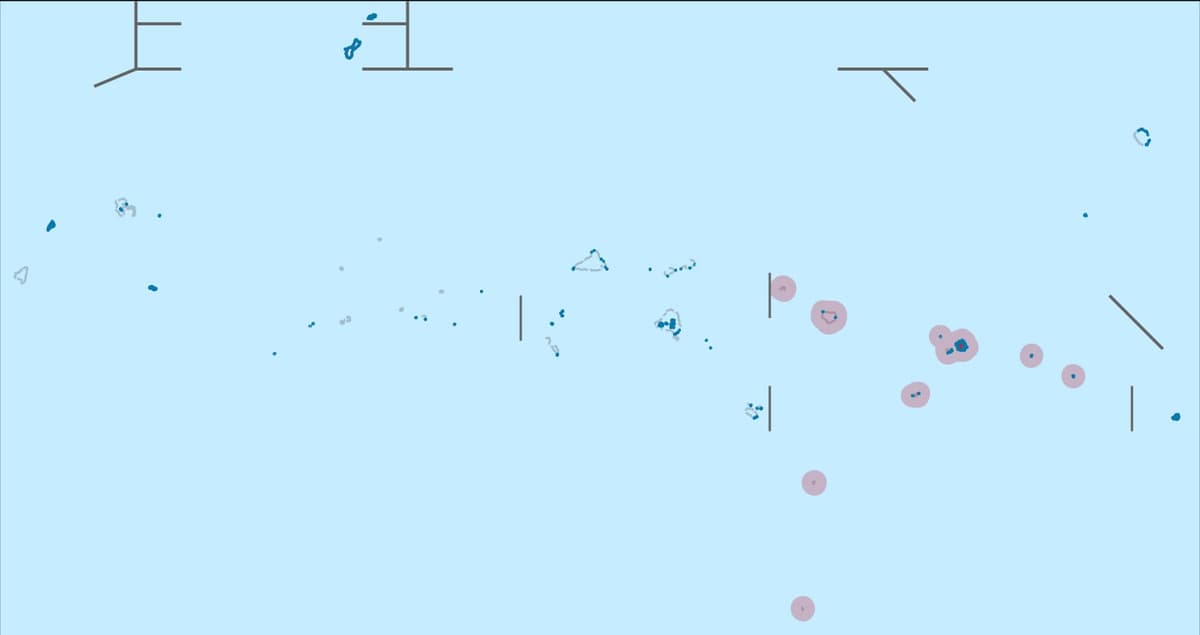
The Federated States of Micronesia is an independent nation of four states — Yap, Chuuk, Pohnpei and Kosrae — strung across the Caroline Islands in the western Pacific. Pohnpei is the biggest single island and the seat of the national government at Palikir, while most day-to-day life centres on the town of Kolonia (Wikipedia: Pohnpei).
It is staggeringly green for a reason: Pohnpei's interior is among the wettest places on the planet, with mountain rainfall that can exceed 7,600 mm a year. That rain feeds rainforest, more than 40 waterfalls and a barrier reef that ranks among the Pacific's best-kept diving secrets. English is the official language used in schools and government, which is precisely why volunteer English teachers have long been welcome — even as Pohnpeian remains the language of home, ceremony and community.
What teaching and volunteering actually looks like here
Historically, the best-known route in was WorldTeach, a non-profit that for years placed volunteer teachers across FSM — including Pohnpei — to teach English, maths, science and other subjects, often with placements funded by local Departments of Education. If you read older guides, this is the program they all point to.
Here is the honest, current picture. WorldTeach has paused its volunteer teaching programs and is not accepting applications, describing itself as being in a "reflection phase" (WorldTeach). So while you'll find plenty of glowing accounts of teaching in Pohnpei through WorldTeach, you cannot simply sign up today.
The Peace Corps, the other classic pathway, phased out of the Federated States of Micronesia at the end of the 2010s, with its long-running Palau/FSM program ending. The Peace Corps announced a return to neighbouring Palau in 2025, but there has been no equivalent announcement for FSM (Peace Corps).
So what's left? Realistically, your options today are:
- Apply directly to the FSM / Pohnpei Department of Education or to individual schools. English is the medium of instruction and qualified teachers are genuinely needed. This is more bureaucratic and less hand-held than a placement agency, but it's the most direct and often the most useful contribution. Start with the FSM National Department of Education.
- The College of Micronesia–FSM (COM-FSM), with its national campus on Pohnpei, is the country's main tertiary institution and a logical contact for anyone with teaching or training experience (COM-FSM, Wikipedia).
- Faith-based and community organisations run some schools and projects; vet these carefully (see the ethics section below).
- Skilled, project-based volunteering — conservation, marine science, public health, IT, trades training — sometimes appears through small local NGOs and reef-conservation outfits rather than big international brands.
If a website is promising you a guaranteed, polished "teach in Micronesia" package, slow down and verify it independently before paying anything. In a place this small, the gap between marketing and reality can be wide.
Visas and entry for FSM
Entry is refreshingly simple for short stays. Most visitors are admitted visa-free for 30 days on arrival, extendable up to 90 days, on completion of a Customs, Immigration and Quarantine form (UK GOV.UK travel advice). You'll generally need a passport valid for the length of stay (rules often cite roughly 120 days of validity beyond arrival), proof of onward or return travel, and evidence of sufficient funds.
The catch for volunteers and teachers: a tourist entry is not a work permit. If you're taking up a teaching post, you'll need the sponsoring school, department or organisation to arrange the correct entry permit and any local clearances. Don't assume you can simply "convert" a tourist stamp once you're there — confirm the paperwork in writing before you fly. Pakistani and other non-US travellers should check the current rules for their nationality with an FSM mission or the sponsoring employer; US citizens have special long-stay rights under the Compact of Free Association, which most other nationalities do not.
If you're planning the trip from Pakistan, our visa services page can help you sort the connecting-country visas you'll likely need en route (Guam/US transit, for example), even though FSM itself is straightforward on arrival.
Getting there: the United "Island Hopper"
There is no easy way to reach Pohnpei, and that's part of the story. The lifeline is United Airlines' "Island Hopper," a legendary milk-run that links Honolulu and Guam with short hops through the central Pacific. It typically runs about three times a week, touching down at Majuro and Kwajalein in the Marshall Islands and Kosrae, Pohnpei and Chuuk in Micronesia, with brief ground stops at each (Simple Flying). Pohnpei's airport code is PNI.
For travellers from Karachi, Lahore or Islamabad, expect a serious journey: a long-haul to a US or East Asian hub, onward to Honolulu or Guam, then the Island Hopper. Plan for two or more travel days each way and build in buffer time — missed connections in this part of the world can mean waiting days, not hours, for the next flight. Start pricing multi-leg routings early on our flight search, and be flexible on dates to land the limited Island Hopper departures. Because schedules and frequencies change, confirm the current timetable directly with United before committing to onward bookings.
Health, vaccinations and remoteness
Take the medical side seriously. Public health guidance recommends being up to date on routine vaccines plus hepatitis A and B, typhoid, and measles (MMR) for FSM, with typhoid and hepatitis A particularly relevant given food- and water-borne risk; rabies and other vaccines may be advised depending on your activities (CDC Travelers' Health: Micronesia). Mosquito-borne illness, including Zika and dengue, occurs, so pack repellent and plan to cover up at dawn and dusk.
The bigger issue is distance from care. Medical facilities on Pohnpei can handle routine problems, but anything serious may require evacuation to Guam, Hawaii or Australia — a hugely expensive proposition without cover. Comprehensive travel insurance that explicitly includes emergency medical evacuation and repatriation is not optional here; it's the single most important thing on your checklist after your flights. Bring a personal supply of any prescription medicines, as the local pharmacy may not stock them.
Cultural respect: sakau, customs and community
Pohnpeian society runs on relationships, hierarchy and respect, and nothing illustrates this better than sakau — the local kava, made from pounded Piper methysticum root strained through twisted hibiscus bark into a famously thick, earthy drink. Far from a casual buzz, sakau is woven into weddings, funerals, reconciliation and diplomacy; it is served in a customary order that honours status, and the etiquette around the sakau stone and the gathering place is taken seriously (Kava.com: Pohnpei). If you're invited, accept graciously, follow your hosts' lead, and don't treat it as a tourist novelty.
A few principles will carry you a long way:
- Dress modestly, especially away from beaches and resorts. Pohnpei is conservative.
- Defer to local hierarchy and elders. Titles and chiefly systems still matter.
- Ask before photographing people, ceremonies or sites; never photograph sakau gatherings without consent.
- Learn a few words of Pohnpeian. A simple kaselehlie (hello) is appreciated.
- Go slowly. "Island time" is real, and pushing for Western efficiency reads as rude.
Many volunteers are informally "adopted" into a host family — a privilege that comes with reciprocal obligations to show up, help out and respect the household's customs.
What else to see and do
You'll want to explore on weekends, and Pohnpei rewards it.
- Nan Madol — the headline sight and a UNESCO World Heritage Site: a sprawling complex of around 100 artificial islets built of basalt and coral off the southeast coast, the ceremonial capital of the Saudeleur dynasty (roughly 1200–1500 CE). Sometimes called the "Venice of the Pacific," it's one of Oceania's most extraordinary ruins — and is also listed as World Heritage in Danger, so tread lightly. If ancient sites are your thing, it sits comfortably alongside the world's great ruins in our roundup of the best archaeological sites in the world.
- Diving and snorkelling — Pohnpei's barrier reef, Manta Road (manta ray cleaning station) and Ant Atoll make it one of the most uncrowded, rewarding dive destinations anywhere (PADI).
- Kepirohi Waterfall — a photogenic ~20 m cascade and swimming pool a short walk from the road, the most visited of the island's many falls.
- Sokehs Rock and Sokehs Ridge — a dramatic basalt landmark and a hike past WWII-era Japanese guns and bunkers, with panoramic views over Kolonia and the lagoon.
Costs and booking notes
Pohnpei uses the US dollar, which removes one common traveller headache. It is not a backpacker-cheap destination, mostly because so much is imported and flights are pricey. Mid-range hotels around Kolonia tend to run on the order of USD 90–130 a night (roughly PKR 25,000–37,000 at typical rates; check current conversion), with guesthouses cheaper and dive resorts more (Tripadvisor: Pohnpei hotels). Volunteers on a placement often have housing arranged or live with a host family, which changes the maths considerably.
Your biggest line item will almost always be airfare — the Island Hopper and its long-haul connections dwarf on-island costs. Eating local, buying produce at markets, and minimising imported goods will keep day-to-day spending sane. Budget extra for the non-negotiable medical-evacuation insurance mentioned above.
A strong word on ethics and responsible volunteering
If you take one thing from this guide, take this: the goal is local benefit, not your résumé or your Instagram. Voluntourism has a genuinely dark side, and Pohnpei deserves better.
- Never volunteer in orphanages, and avoid any program built around "orphan experiences." This is now recognised as a serious child-protection issue: short-term volunteers cycling through children's lives causes real harm, and demand for these placements has even been linked to children being recruited into institutions unnecessarily. Reputable bodies are clear that family- and community-based care is the right model (Better Care Network; UNICEF).
- Choose programs that fill a real, identified local need — a vacant teaching post, a skill the community has asked for — rather than ones that exist mainly to give visitors something to do.
- Stay long enough to matter. A week of "helping" usually helps the volunteer more than the host. Commit to a full term where you can.
- Bring a skill, and let locals lead. You should be supporting Pohnpeian teachers, students and institutions, not replacing or overruling them.
- Follow the money. Reputable programs are transparent about fees, how funds are used, and how much actually reaches the community.
- Vet, vet, vet. With the big classic programs paused or gone, more of the responsibility falls on you. Cross-check any organisation independently and ask hard questions before you commit time or money.
Done well, volunteering in Pohnpei is one of the most rewarding things you can do — quietly useful, deeply humbling, and a genuine cultural exchange. Done carelessly, it's just another extractive trip. Aim for the first.
FAQ
Is Pohnpei the same as Micronesia?
Not quite. Pohnpei is one of the four states of the Federated States of Micronesia and home to the national capital, Palikir. "Micronesia" can also loosely refer to the wider Pacific region, but as a country it means the FSM.
Can I still volunteer or teach in Pohnpei in 2026?
You can, but the classic routes have changed. WorldTeach has paused its programs and the Peace Corps left FSM, so the most reliable path now is applying directly to the FSM/Pohnpei Department of Education, the College of Micronesia–FSM, or vetted local organisations. Verify any program's current status before committing.
Do I need a visa for the Federated States of Micronesia?
Most nationalities receive 30 days visa-free on arrival, extendable to 90 days, for tourism. A tourist entry is not a work permit, so teachers and volunteers must have the correct permit arranged by their sponsoring institution. Check the latest rules for your passport before travelling.
How do I actually get to Pohnpei?
Almost everyone arrives on United Airlines' "Island Hopper," which links Honolulu and Guam via several Pacific islands a few times a week. From Pakistan, expect a long-haul to a US or Asian hub, onward to Honolulu or Guam, then the hopper to PNI. Confirm schedules directly with United.
What vaccinations and health precautions do I need?
Health authorities commonly recommend being current on routine vaccines plus hepatitis A and B, typhoid and MMR, with mosquito-borne illness (including Zika and dengue) a real risk. Critically, arrange travel insurance that covers emergency medical evacuation, since serious care may mean flying to Guam, Hawaii or Australia.
Is volunteering in orphanages a good way to help?
No. Orphanage volunteering is strongly discouraged by child-protection organisations because it harms children and can fuel demand that keeps kids in institutions. Support family- and community-based programs instead, and choose placements that meet a genuine local need.
The honest verdict
Pohnpei is remote, rainy, ravishingly beautiful and culturally rich — and it can absolutely use skilled, committed volunteers. Just go in clear-eyed: the famous programs of the past are mostly paused or gone, so you'll need to do your own homework, arrange the right permits, insure properly for evacuation, and centre local benefit at every step. Get those right and you'll find one of the Pacific's most genuine experiences waiting at the end of a very long flight.
If you're still deciding when to go, our holiday weather guide can help you read the seasons before you book. When you're ready, compare routings on our flight search, sort your paperwork via visa services, and lock in proper travel insurance before you leave.
Written by
Travel.pk Editorial Desk
Researches and edits practical travel guidance for people planning journeys from Pakistan.
How we research and edit →Comments
Loading comments…